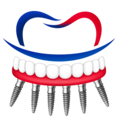
Who All-on-6 Is Typically Designed For
All-on-6 is a full-arch implant solution, which means it is designed for patients who are missing all or nearly all of their teeth on one or both jaws — or whose remaining teeth are failing to the point where extraction is the realistic outcome. The specific groups for whom All-on-6 is most commonly appropriate include:
- Patients who are fully edentulous (have no remaining teeth) on one or both arches and are currently wearing full dentures
- Patients with multiple failing or heavily compromised teeth who need extensive extractions and want a fixed, permanent solution rather than a new denture
- Long-term denture wearers who find their dentures increasingly uncomfortable as the bone ridge changes shape over time
- Patients who have previously had dentures but want a fixed solution that does not move and allows them to eat normally
All-on-6 is not typically the first-line option for patients with just a few missing teeth in an otherwise healthy mouth. In those cases, individual implants or implant-supported bridges are more appropriate. All-on-6 is specifically suited to patients who need a complete or near-complete arch replacement.
If you are unsure whether your situation warrants All-on-6 specifically, our guide on what All-on-6 actually is covers how it compares to individual implants and why the distinction matters for treatment planning.
The Clinical Assessment: What It Involves
Before any All-on-6 treatment can be properly planned, a thorough clinical assessment is required. This is not a quick consultation — it takes time and uses imaging technology that a standard dental X-ray cannot replace.
Full Dental Examination
The assessment begins with a complete examination of the mouth: any remaining teeth, the condition of the gums, signs of active infection, and the overall health of the oral tissues. Any existing infection or gum disease needs to be addressed before implant surgery — placing implants in an infected environment significantly increases the risk of failure.
Standard X-rays
A full-mouth dental X-ray series gives the dentist an initial view of the teeth, bone levels, and any pathology that needs attention. These are useful but two-dimensional — they do not provide the three-dimensional information needed for implant planning.
Cone Beam CT (CBCT) Scan
The CBCT scan is non-negotiable for All-on-6 planning. It produces a detailed 3D image of the jaw showing exact bone volume and density at each proposed implant site, the precise location of the sinus cavity (critical for upper jaw implants), the path of the inferior alveolar nerve (critical for lower jaw implants), and the exact dimensions available for implant placement. Without this information, it is not possible to plan the surgery safely or to give an accurate cost estimate that accounts for whether bone grafting will be needed. Be cautious of any clinic that quotes a firm price for All-on-6 without reviewing a CBCT scan.
Bone Volume: The Critical Factor
The availability of sufficient bone is the single most important clinical factor in All-on-6 candidacy. Each of the six implants requires a minimum depth and width of bone to be placed safely and to integrate successfully. When there is insufficient bone — either because it was never there or because it has resorbed after tooth loss — the options are bone grafting, a different implant approach, or a different treatment altogether.
Bone resorption after tooth loss is predictable and progressive. Patients who have been without teeth in an area for many years, or who have worn full dentures for decades, often have significantly reduced bone volume. The longer the teeth have been absent, the more bone is typically lost. This is one reason why acting sooner rather than later generally produces better implant outcomes.
When Bone Grafting Is Needed
If the CT scan reveals insufficient bone, grafting can often build it up to a level that supports implants. Minor grafting can sometimes be done at the time of implant surgery. More significant grafting — such as a sinus lift for the upper jaw — requires a separate procedure with a healing period of 4-9 months before implants can be placed. This adds both time and cost to the overall treatment plan.
In cases where bone loss is very severe and grafting is not a viable option, All-on-4 may be considered as an alternative. All-on-4 uses strategically angled rear implants to avoid areas of poor bone, making it suitable for patients who cannot accommodate six standard implants. It is a different — not inferior — solution for a different clinical situation.
Medical Conditions That Affect Candidacy
Several medical conditions and medications influence whether a patient is suitable for implant surgery. None of these are automatically disqualifying, but they require careful management and honest discussion with the treating surgeon.
Diabetes — well-controlled diabetes (HbA1c below 8%) is generally manageable. Poorly controlled diabetes significantly impairs healing and increases infection and implant failure rates.
Smoking — smoking reduces blood supply to the surgical site and impairs healing. It is associated with meaningfully higher implant failure rates, particularly in the upper jaw. Most surgeons will discuss smoking cessation before and after surgery. Some may decline to treat patients who continue to smoke heavily.
Bisphosphonates — this class of medication (used for osteoporosis and some cancers) affects bone metabolism and is associated with a risk of osteonecrosis of the jaw around implant sites. Patients on long-term bisphosphonate therapy require a specialist risk assessment. Oral bisphosphonates (such as alendronate) carry lower risk than intravenous formulations, but both require careful evaluation.
Blood thinners — anticoagulant medications (warfarin, apixaban, clopidogrel) affect the bleeding response during surgery. These are manageable with coordination between the dental team and the patient's prescribing doctor, but need to be declared and planned for.
Immune conditions and immune-suppressing medications — conditions or treatments that suppress the immune system (including some rheumatological conditions and post-transplant immunosuppression) increase infection risk and may affect osseointegration. These require individual assessment.
Active cancer treatment — radiotherapy to the head and neck in particular is associated with reduced bone healing capacity. Patients who have received head and neck radiotherapy require specialist evaluation — this is not an automatic contraindication but it significantly changes the risk profile.
Age Considerations
All-on-6 is only appropriate for adults whose jawbone has fully developed. In practice, this means most patients need to be in their late teens at minimum — typically 18 to 21 depending on the individual — as jaw development continues into early adulthood. Placing implants before jaw growth is complete risks the implants being displaced as the jaw continues to develop.
At the other end of the age spectrum, older age is not itself a barrier. Patients in their 70s and 80s can be excellent candidates if they are in reasonable general health and have adequate bone. The relevant considerations are systemic health, medication profile, and healing capacity — all of which can be assessed individually rather than using age as a cutoff.
What Happens If You Are Not Immediately Suitable
Being told you are not immediately suitable for All-on-6 does not necessarily mean you cannot have it at all. The most common reason for not being immediately suitable is insufficient bone, which is often addressable with grafting. The trade-off is additional time — bone grafts typically require months to integrate before implants can be placed.
Other situations that might delay or modify treatment include: active gum disease that needs to be resolved first, uncontrolled systemic conditions that need to be stabilised, or the need for specific teeth to be extracted and given time to heal before implant placement. A good clinician will map out a realistic timeline for these preparatory steps.
If All-on-6 is genuinely not suitable for your anatomy, alternatives worth discussing include All-on-4, implant-retained dentures (which use fewer implants but remain removable), or high-quality conventional dentures while you address the underlying factors. Our guide comparing All-on-6 vs dentures covers who each option suits.